The Ascendant is the one point in a chart that cannot be guessed from a birthday, a Sun sign or a family resemblance. It is the degree of the zodiac rising over the eastern horizon at the moment and place of birth, and it moves at roughly one degree every four minutes. That speed is why the same date of birth produces a different chart at 09:20 and at 09:50, and why the Ascendant is the first thing a careful astrologer asks about.
What the Ascendant actually measures
At any moment, from any location, one degree of the zodiac is coming up over the eastern horizon. That degree is the Ascendant. It is a geometric fact about the sky and the place, not a symbolic choice, and it can be calculated to the minute once the birth time and coordinates are known.
Because it marks the start of the houses, the Ascendant does more structural work than any other point. The first house begins there, the twelfth ends there, and the remaining cusps follow in sequence. Change the Ascendant by a few degrees and the entire framework of the chart shifts with it, which is why an approximate birth time is a larger problem than it sounds.
Why four minutes matter
The rate is close to one degree of ecliptic longitude per four minutes of clock time. Thirty minutes of uncertainty therefore translates to about seven and a half degrees of movement. Since a sign holds thirty degrees, that is roughly a quarter of a sign, enough to matter whenever the Ascendant sits near a boundary.
Within about seven degrees of a cusp, half an hour changes which sign is rising. The chart then has a different first house, a different ruler of the chart, and a different distribution of planets across the houses. Two people born on the same day two hours apart will almost always have different Ascendants and different house layouts, even though their Sun signs are identical.
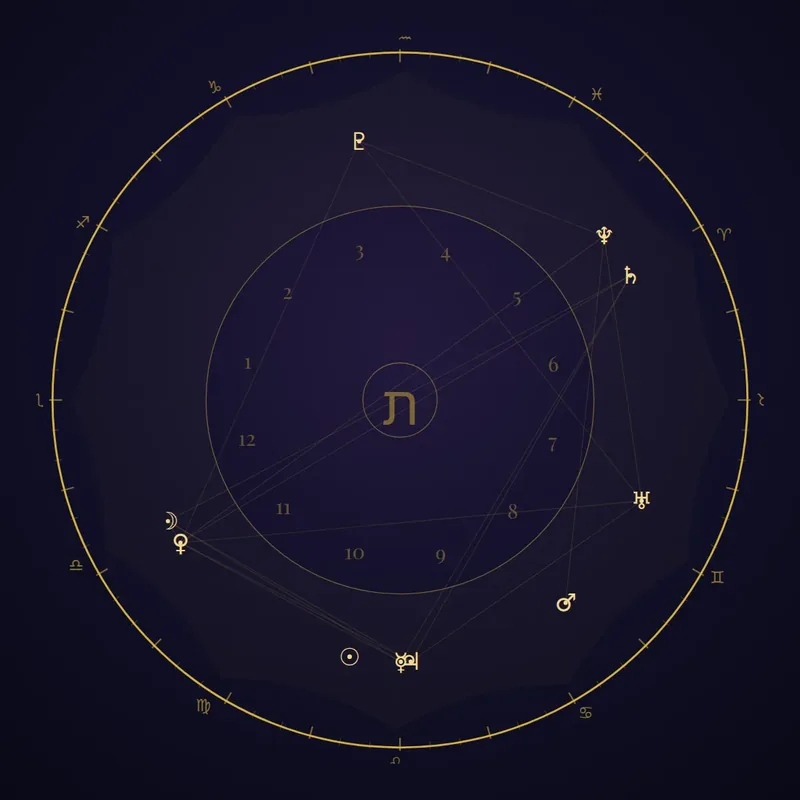
A worked example: 09:20 and 09:50 in Guadalajara
Suppose a birth certificate from Guadalajara records 09:20, and a family memory says the delivery was closer to 09:50. The half hour between them moves the Ascendant by roughly seven degrees. If the Ascendant at 09:20 sits at 28 degrees of one sign, then by 09:50 it has passed the boundary and sits near 5 degrees of the next sign.
That single change rewrites the chart's frame. The first house cusp moves from the last degrees of one sign to the early degrees of another, the ruler of the chart changes, and planets that were in the twelfth house may now appear in the first. The Sun, Moon and planets have barely moved in thirty minutes. The structure around them has not stayed still.
This is not an argument that birth times are unreliable. It is an argument for using the recorded time, and for treating a remembered time as a range rather than a fact. When the Ascendant is far from a boundary, a thirty minute error may change very little. When it is close, the same error changes the reading.
Sun, Moon and Ascendant do different jobs
The Sun sign describes the identity theme, the organizing purpose a person returns to across a life. The Moon sign describes the emotional and habit rhythm, the way comfort is sought and the texture of daily reaction. Both are set by the date and, for the Moon, by a window of hours that can usually be narrowed without an exact time.
The Ascendant is not a third personality label. It is the angle of the chart and the start of the houses. It describes how the chart is oriented: which planets are angular, which house holds the Sun, where the chart's weight sits. Reading it as "the mask you wear" reduces a structural point to a costume, and it misses the information the angle actually provides.
The ruler of the chart
The planet that rules the rising sign is traditionally given extra weight, because it governs the first house and therefore the body, the manner and the starting conditions of the life. Two charts with the same Sun sign but different Ascendants will have different chart rulers, and those rulers will sit in different houses. This is one reason two people born on the same day can describe themselves in ways that sound unrelated.
When the birth time is approximate
Many adults have a time rounded to the nearest quarter hour, copied from a memory, or missing entirely. A responsible reading says so. If the time is a range, the astrologer can test the Ascendant at both ends and report what is stable and what is not. If the Ascendant stays in the same sign across the range, the house layout is probably sound. If it crosses a boundary, the chart needs a caveat.
Rectification, the practice of working backward from known life events to a birth time, exists for this problem. It is an inference, not a recovery of the original record, and it should be presented as such. A chart built on a guessed time can still be useful for the Sun and the slower planets, but its houses deserve less confidence. The glossary explains the terms used in that discussion, and a free sample chart shows how the wheel is laid out before you commit to a full reading.
What this cannot tell you
- It cannot recover a birth time you do not have. Calculation needs an input, and no amount of interpretation turns a guess into a record.
- It cannot describe your character from the rising sign alone. The Ascendant is an angle, and its meaning depends on its ruler, its aspects and the planets in the first house.
- It cannot predict events. The Ascendant marks where the houses begin, not what will happen in them.
- It cannot replace medical or psychological care. If you are dealing with a health issue, the chart is not the appropriate instrument.
Common questions
Can I find my Ascendant from my Sun sign?
No. The Sun sign depends on the date, while the Ascendant depends on the date, the exact time and the place. Every Sun sign can rise with any of the twelve signs, which is why the combination has to be calculated rather than inferred.
How much does a few minutes of birth time change?
About one degree per four minutes. That sounds small, but near a sign boundary it is decisive. Fifteen minutes can move the Ascendant almost four degrees, and thirty minutes about seven and a half, which is enough to change the rising sign when the degree is close to the cusp.
Do all twelve signs really rise in one day?
Yes. The Earth completes a turn in twenty four hours, and the whole zodiac passes over the eastern horizon in that time. The signs do not rise at equal speed, since some take longer than others depending on latitude, but all twelve appear within the day.
Is the Ascendant the same as the first house?
The Ascendant is the cusp of the first house, the point where it begins. The house extends from that degree into the following sign or signs. They are related but not identical, and the distinction matters when the first house spans more than one sign.
If you know your birth date, time and place, the Ascendant can be calculated rather than guessed, and the chart that follows will show which sign rises, which planet rules it and where the houses fall. You can request a natal chart reading and see the angle your chart is built on, along with the caveats that apply if the recorded time is less than exact.
Get your personalized natal chart
Receive your personalized PDF within 24 hours.